
Interview Communication Skills: How to Impress Recruiters and Get Hired
In the current competitive job market, merely possessing adequate technical skills won’t be enough to ultimately obtain your desired position. Much of a recruiter’s assessment of potential candidates is based on how confidently, clearly and professionally you communicate through your interview. For this reason, interview communication skills are critical.
If you are a student preparing for a campus placement, a new graduate preparing for your first interview, or a professional seeking to further your career in your profession, possessing strong communication skills at an interview can affect the employer’s decision to hire you.
Employers are interested in applicants not only because they can do the tasks required of them in their jobs, but also because they can collaborate, solve problems and represent the organization in a professional manner. A candidate’s interview communication skill will directly affect how the employer perceives their overall capability and makes a positive first impression.
This is your complete source of information about the importance of interview communication skills, practical strategies for improving your interview communication skills, examples of common interview questions regarding interview communication and examples of what would be considered communication skills interview questions and answers to help you succeed. Edufolks provides specialized interview preparation and communication training that helps students perform confidently during placements and job interviews.
What Are Interview Communication Skills?
The Interview Communication Skills describe your competency in relaying your thoughts, background, credentials, and accomplishments in both a clear and confident manner during an interview.
These include:
- Verbal communication
- Active listening
- Nonverbal communication
- Professionalism and confidence
- Presentation of your ideas
- Emotional intelligence
- Interpersonal Communication
Candidates with good verbal and nonverbal communication skills will be successful in explaining the value that they offer to others while building positive relationships with the individuals who are interviewing them.
Why Interview Communication Skills Matter
A recruiter often makes up their mind about whether a candidate will get the job within the first few minutes of meeting them; therefore, strong communication skills allow a candidate to create a positive first impression almost immediately.
The Benefits of Strong Communication During an Interview:
Professional recruiting staff usually make up their minds during the first few minutes of an interview about whether or not to hire a candidate, creating a positive initial impression before the actual interview begins. Additionally, effective communication with your interviewer will provide you with significant advantages such as:
1. A Positive First Impression:
The use of effective communication during the interview demonstrates that you are a professional, confident, and well-prepared candidate.
2. Increased Confidence for the Recruiter:
The ability to communicate clearly and effectively with your recruiter will allow you to develop a level of confidence in a particular candidate’s ability to perform the responsibilities associated with a specific position.
3. Demonstration of Your Skills & Experiences:
Effective communication will allow you to articulate your experience and accomplishments to the hiring manager.
4. Demonstration of Professionalism:
A strong ability to communicate effectively demonstrates that you will be a professional who is ready and willing to be a productive team member.
5. Increase Your Chances of Obtaining Employment:
Candidates who are effective Interview Communication Skills often dominate the interviewing process regardless of the level of qualifications of the other candidates.
Essential Components of Interview Communication Skills
Verbal Communication
Clear and confident speaking is one of the most critical factors in interviews.
Focus on:
- Pronunciation (clear sound of words)
- Language that is appropriate for business
- Pace (speed) of your speaking
- How to respond concisely
Active Listening
Listening will allow you to hear the question and answer correctly.
Good listeners:
- Do not interrupt
- Pay attention
- Ask clarification questions
- Respond with thoughtfulness.
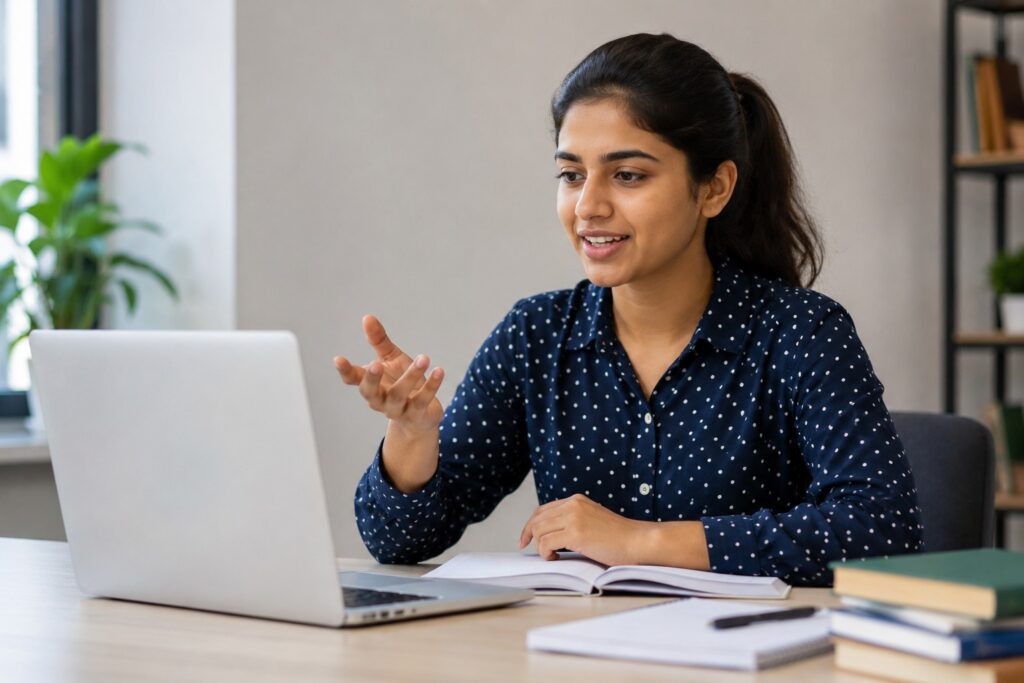
Non-Verbal Communication
The body language you use is very significant to how you perform in an interview. Maintain:
- Eye contact with the person interviewing you
- Positive body position (sitting straight)
- Professional appearance (dress appropriately)
- Correct facial expressions (smile when necessary)
Confidence
Confidence can often show that you can do the job; therefore, employers often associate confident communication with leadership ability.
Emotional Intelligence
Having emotional intelligence allows the candidate to stay calm, maintain professionalism, and act in a controlled manner during the interviewing process.
Common Interview Communication Mistakes
A lot of candidates miss out on being hired due to communication errors that are preventable.
1.Speaking Too Quickly
Often when candidates are nervous they tend to answer questions quicker than normal.
2.Providing One Word Answers
One word responses do not show your level of expertise or experience.
3.Interrupting the Interviewer
Interrupting the interviewer will show that you have no respect for them and that you are unprofessional.
4.Not Making Eye Contact
Making poor eye contact can be interpreted as being uncomfortable or insecure.
5.Using Too Many Filler Words
Using excessive filler words like ‘uh’, ‘um’, ‘you know’ reduces the effectiveness of your communication.
How to Improve Interview Communication Skills
1. Prepare for Interviews by Practicing with Mock Interviews
Mock interviews give you a chance to experience the real interview environment and build your confidence.
2. Record Your Responses to see if You Can Hear Yourself
By listening to recorded responses, you can identify communication weaknesses that need improvement.
3. Develop Your Vocabulary
Having a strong vocabulary builds clarity, as well as professionalism.
4. Improve Your Listening Skills
Through active listening, you increase your understanding and quality of response to the interviewer.
5. Learn How to Answer Questions in a Structured Way
Using techniques like STAR helps you answer questions more formally and allows you to organize your answers effectively.
6. Join a Public Speaking Activity
Public speaking gives you the opportunity to develop both your confidence and clarity when communicating.
Top Communication Interview Questions
The way communication interview questions are used by recruiters is to determine the social skills of a candidate.
Typically you will find the following examples:
1) What is your style of communicating to other people?
2) Can you tell me about a time when you had to communicate something difficult and how did you do it?
3) When there is a misunderstanding, what processes will you go through?
4) When you have used your communication skills to solve a difficult problem?
5) How do you adapt your method of communicating to accommodate to each audience?
6) What do you do to ensure effective communication within a group?
7) Give me an example of a communication challenge and how you were able to resolve the situation.
8) How do you deal with misunderstandings with others in the workplace?

All of these examples of communication interview questions will allow an employer to measure the candidate’s ability to communicate and work collaboratively.
Communication Skills Interview Questions and Answers
Preparation for communication skills interview questions and answers helps to improve overall performance during the interview process.
Q.1- How would you assess your communication skills?
A: I communicate clearly, professionally, and adaptively. I try to listen completely to what others say before responding so that I can ensure I am understood, while providing the listener with complete information to comprehend my point of view. In working on academic projects and completing internships, I feel that effective communication played an important role in the successful collaboration with my team, as well as in completing our projects.
Q.2- Describe a situation where communication was important in resolving an issue.
A: I was the project manager for a group project, and there were various views among team members regarding how to allocate our tasks effectively to complete the project on time. Therefore, I started a meeting where we discussed these viewpoints and provided team members the opportunity to express their opinions openly. Through clear communication and collaboration, we resolved our misunderstanding and were able to successfully complete the project.
Q.3- How do you communicate with challenging individuals?
A: When communicating with a challenging individual, I remain calm and listen attentively to the other person. Additionally, I strive to gain an understanding of their perspective regarding the issue, and attempt to address any concerns that they have through clear, respectful communication.
Q.4- What is your communication style when working in teams?
A: Communication is the most important tool for effective teamwork. I communicate frequently by providing my team with updates on my work and by soliciting their feedback, so that we can maximize our ability to achieve the objectives that all team members share.
Tips to Impress Recruiters During Interviews
Do Your Homework On the Organization:
By doing research about the organization, you build credibility and demonstrate preparedness along with showing that you are genuinely interested.
Rehearse Typical Interview Questions
Being prepared to answer common interview questions will help with nerves and improve the quality of the replies.
Show Good Body Language
Demonstrating good posture and eye contact when speaking with the interviewer can make a great first impression.
Give Specific Examples of Past Experiences
When answering questions about past work experiences and accomplishments give specific examples to demonstrate your knowledge.
Ask Quality Questions
Inquiring about important topics relates to interest and involvement in the discussion at hand.
Be Positive
Always be professional and optimistic during the interview.

The Role of Communication Skills in Career Growth
The advantages of effective communication don’t stop at the interview.
- Those who have a higher level of communication typically:
- Are promoted more quickly in their careers,
- Have increased opportunities to lead,
- Have improved teamwork and
- Foster stronger client relationships,
- Have a larger impact at work than those without effective communications skills.
Hence, good interview communication skills are important both for getting a job and developing your career long-term.
Benefits of Interview Communication Training
Professional communication training supports candidates by:
- Increasing their speaking confidence
- Improving their ability to handle and increase their success in job interviews
- Creating good professional communication habits
- Improving their ability to make presentations
- Improving their ability to listen actively
- Enhancing their interpersonal skills
Individuals who put effort into developing their communication skills tend to do better than those who do not have these types of skills when they are applying for jobs.Edufolks provides interview-focused communication training, mock interviews, and personalized feedback to help students perform confidently during recruitment processes.
Conclusion
To positively connect with recruiters and have a better possibility of receiving a job offer after an interview, strong communication interview questions at the Interview are very important. Communication skills enable a candidate to present his or her qualifications in a professional manner and create confidence through effective interviewing techniques.
Candidates can significantly improve their interview performance by preparing for many communication interview questions, developing structured responses, and reviewing communication skills interview questions & answers.
Communication is a skill that will develop through practice, preparation, and ongoing education. Therefore, investing in improving communication today can lead to many different careers tomorrow.With the right preparation and guidance from Edufolks, candidates can improve their interview communication skills and increase their chances of getting hired.
FAQs:
Communication Skills For Interviews are non-verbal, verbal, interpersonal skills & listening that assist interviewees to communicate appropriately during their job interviews.
Communication Skills/Writing for Interviews allows an interviewee to provide information clearly about their qualifications; it establishes a rapport with a recruiter; this allows for a high level of professionalism.
Examples of questions related to the communication process/communications are: Communication style: Working as a team; Dealing with conflict; Active Listening; Workplace Collaborations.
You will develop your interview communication skills by engaging in mock interviews, recording responses, increasing your vocabulary, establishing the habit of active listening and participating in public speaking-related activities.
You can prepare for communication skills interview questions and answers by reviewing common interview questions, preparing structured responses, speaking with confidence and providing examples that demonstrate your communication-related skills. Other methods of preparation include: researching the position and employer the interview for, establishing a positive, professional appearance before, during, and after the interview